Dr. Virginia Marano
Virginia Marano (she/her) is an art historian and curator. She is currently an associate scholar in the Lise Meitner Group “Coded Objects” at the Kunsthistorisches Institut in Florenz – Max-Planck-Institut.
She holds a PhD in art history from the University of Zurich. To conduct her doctoral research, she was awarded an ESKAS doctoral scholarship (2018–2021) and a FAN Grant (2021). In 2022, she was a SNSF Doc.Mobility fellow in the Art History Department at Hunter College/CUNY. Her thesis examined the diasporic dimension in the works of Jewish women sculptors in Post-war New York, previously assimilated to feminism but not yet connected to the question of exile. She is also the co-director of the research project "Rethinking Art History through Disability" at the University of Zurich, which aims to rethink the intersections of disability theory and art history through the lens of the non-normative body.
In 2023, she was a Research Fellow at the Fondazione Giorgio Cini in Venice, working on the PNRR–PEBA project for the Removal of Physical, Cognitive, and Sensory Barriers in Cultural Sites, funded by the NextGenerationEU program. In addition to her academic work, she serves as a Curatorial Assistant at MASI, Museo d’Arte della Svizzera italiana, Lugano. She has previously worked at the Mumok – Museum moderner Kunst Stiftung Ludwig (Vienna, 2017), Artipelag (Stockholm, 2018), and Last Tango (Zurich, 2020–2021). She is a Board Member of the Fondazione Centro Giacometti and an Advisory Board Member of the Biennale Bregaglia.
Her work thrives on interdisciplinary collaboration and focuses on access as a critical space for rethinking the relationships between art, science, and technology. Instead of approaching accessibility as a fixed or technical matter, she investigates it as an open process—marked by uncertainty, experimentation, and care—that exposes the ableist structures embedded in cultural and technological systems. Grounded in intersectional feminist theory, her research-based curatorial practice develops methods of decentralization and shared inquiry. Understanding access as a shifting encounter between bodies, materials, and tools, she seeks to build a vocabulary that connects the humanities with design practice. Her work asks what kinds of environments and meanings arise when we design not only for bodies, but with them—and how access can become a site of ethics, imagination, and cultural creation.
In May 2025, she was appointed Junior Research Fellow in the Young Investigator Group Preparation Program (YIG Prep Pro) at the Karlsruhe Institute of Technology (KIT), Chair of Architectural Theory, Department of Architecture, for the period January 2026–December 2027.
Research Interests
- Gender and feminist theories in contemporary art
- Exile studies
- Critical disability studies / Crip theory and disability aesthetics
- Creative and embedded access / Access intimacy
- Decentralised exhibition making
Teaching
- Fall Semester 2024: Guest Lecture “Das olfaktorische Museum: Düfte archivieren und Erlebnisse kuratieren,” in the seminar Riech dran! Geruch in der Kunst der Neuzeit, led by Laura Valterio at the Institute of Art History, University of Zürich
- Spring Semester 2024: Guest Lecture “Exhibiting Advocacy: Projects on Motherhood and Abortion” in the seminar course “Icons of Life: Bilder und Interkörporalität von Leonardo bis zum Reagenzglas,” led by Laura Valterio at the Institute of Art History, University of Zürich
- BA and MA Übung, "Being (not) at Home in the World - Exiled Women Artists and Beyond" (English), University of Zurich, Spring 2023
- Lecture Series “Care, Disability and Art” (English), organized with Charlotte Matter, Laura Valterio, Marie-France Rafael und Judith Welter, University of Zurich & Zurich University of the Arts ZHdK, spring 2023
- Field trip to London “Bodies of Difference: Disability, Art History, and the Museum” (English), with Charlotte Matter, Laura Valterio, and Jess Bailey, University of Zurich, fall 2022
Publications
Peer-reviewed articles in international journals and edited volumes
- (in print)*: Virginia Marano. “(Re)-Evaluating Artistic Norms and Temporalities: Feminist and Disability Perspectives in Contemporary Practice,” in Re-Evaluation in Feminism and Contemporary Art. Edited by Katy Deepwell. Vernon Press.
- (accepted)*: Virginia Marano. “Decoding Desire: Access and Intimacy in Sexual Objects,” Journal of Design History, special issue “Designing for Disability Futures”. Edited by Ignacio G. Galán and David Serlin.
- March 2025: Virginia Marano. “Beyond the ‘White Cube’: Intersecting Art and Design in Hospital Spaces,” PAD: Pages on Arts and Design, special issue “Art and Design in the Workplace,” no. 27, vol. 17 (2024): 123-147. ISSN: 1972-7887
- December 2024: Virginia Marano, Charlotte Matter, and Laura Valterio. “Bodily Matter and Complex Embodiment in the Art of Donald Rodney.” RACAR: Revue d'art canadienne / Canadian Art Review 49, no. 2 (Fall 2024): 112-128. ISSN 0315-9906.
- January 2024: Julie Ren, Charlotte Matter, Rosa Sancarlo, and Virginia Marano. “Crisis and Collectives Shaping Art Events: From Events that Matter to Events that Care,” Third Text 37, no. 5–6 (2024): 601–615. DOI: https://doi.org/10.1080/09528822.2023.2297626
- November 2023: Virginia Marano. “Being (not) at Home in the World: Exiled Women Artists in Postwar New York,” Image & Text, University of Pretoria, no. 37 (2023): 1–25. ISSN: 2617-3255. DOI: https://doi.org/10.17159/2617-3255/2023/n37a14.
- June 2020: Virginia Marano. “Gertrud Goldschmidt and Ruth Vollmer: Women in Design between Material and Mathematical Experimentations,” PAD: Pages on Arts and Design, special issue “The women’s making,” no. 18 (2020): 173–195. ISSN: 1972-7887.
* Full versions of publications marked as “in print” or “accepted” will be made available upon request
Edited Volumes
Jess Bailey, Virginia Marano, Charlotte Matter, and Laura Valterio, eds., Words for Disability and Art History (forthcoming)
Non-Peer-Reviewed Articles and Book Chapters
- October 2025: Virginia Marano, Charlotte Matter, Laura Valterio, Jillian Crochet, and Vincent Barras. “Transforming the Medical through Art: Artistic Interventions on Normative Notions of Body and Health,” in Biomedical Visions: Aesthetics, Epistemology, and Medical Practice. Edited by Alfreed Freeborn and Elizabeth Hughes, pp. 23-50. Berlin: Hatje Cantz Verlag. ISBN:978-3-7757-6085-0.September 2025: Virginia Marano. “Carona. Unfolding a Space Called Home,” in David Weiss. Il Sogno di Casa Aprile. Carona 1968-1978, pp. 25-40. Edited by Tobia Bezzola and Virginia Marano. Patrick Frey: Zürich & MASI Lugano, Switzerland. With texts by Virginia Marano, Stephan Kunz, Bice Curiger, and Andreas Schwab. ISBN: 978-3-907236-84-0.
- November 2024: Virginia Marano. “Review: Relocating Modernism: Global Metropolises, Modern Art and Exile (METROMOD), a Digital Exile Archive and Urban Mapping Project,” in Exilforschung. Ein internationales Jahrbuch, Band 42/2024: Exil und Emotionen. Edited by Esther Kilchmann and Sebastian Schirrmeister, pp. 325–327. Walter de Gruyter. ISBN: 978-3-11-132931-4.
- August 2024: Virginia Marano, Charlotte Matter, and Laura Valterio. “Beyond Representation: Disability in Art History,” in Eine Kunstgeschichte ist keine Kunstgeschichte. Kunstwissenschaftliche Perspektivierungen in Text und Bild, pp. 225–240. Edited by Birte Kleine-Benne. Berlin: Logos. ISBN: 978-3-8325-5798-0. DOI: https://doi.org/10.30819/5798.
- March 2023: Virginia Marano. “Walking Together in the Woods,” in Rui Chafes and Alberto Giacometti: Gris, Vide, Cris, pp. 118-124. Exhibition catalogue, Musée de la Fondation Calouste Gulbenkian (Lisbon). Madrid: La Fábrica. ISBN: 9788418934797.
- January 2020: Virginia Marano. “Traces of Life in Stones: A Dialogue between Ulrika Sparre and Alberto Giacometti,” in Ear to the Ground. Edited by Ulrika Sparre with texts by Virginia MacKenny, Johan Redin, Jacquelyn Davis, Sue Spaid, and Marti Manen. Stockholm: Art and Theory Press, 39–41. ISBN: 9789151943824.
Activities
Organized Conferences, Workshops and Symposia
- Co-organiser, panel "Uncertain Access: Art, Design, and Technology," College Art Association (CAA) 114th Annual Conference, Chicago, 18–21 February 2026. With Rosemarie Garland-Thomson, Georgina Kleege, and David Serlin.
- Co-Organizer of the Workshop “CripTech Creativity: Rethinking Access through Art and Technology,” with the Lise Meitner Group “Coded Objects,” Kunsthistorisches Institut Florenz - Max Planck, Florence, 21 March 2025.
- Co-Organizer of the workshop "Sensorial Encounters: Haptic and Non-Visual Access in Art," Bibliotheca Hertziana. With Tobias Teutenberg (Bibliotheca Hertziana), Charlotte Matter, and Laura Valterio (University of Zurich), 25-26 November, 2024.
- Organiser of the symposium “Creative Access and Digital Innovation,” Fondazione Giorgio Cini, ARCHiVe Online Academy 2023-2024, Venice. With Kamran Behrouz (Visual artist), Amanda Cachia (University of Houston), Georgina Kleege (University of California, Berkeley) and Nina Mühlemann (Artist, Bern Academy of the Arts), 23 January 2024
- Co-organiser of the symposium “The Politics of (Self-)Care – A Symposium on Disability Justice and Collective Action as Self-Care,” at the Migros Museum für Gegenwartskunst. With Michael Birchall and Claudia Heim (Migros Museum), Charlotte Matter and Laura Valterio (University of Zurich), 18 November, 2024.
- Co-organiser of the workshop “Unlearn the Body: New Approaches on Disability and Art History,” University of Zurich. With Amanda Cachia (University of California, San Diego), Charlotte Matter and Laura Valterio (University of Zurich), June 3-4, 2022.
- Co-organiser of the symposium “In Light of Crisis. The Fraught Significations of Contemporary Biennials,” University of Zurich. With Julie Ren, Charlotte Matter, Ifigenia Dimitrakou, and Rosa Sancarlo (University of Zurich), 19-20 May, 2022.
- Co-organiser of the artist talk with Emanuel Almborg, Research Project "Rethinking Art History through Disability," Institute of Art History at the University of Zürich in collaboration with the Bibliotheca Hertziana (Rome, Italy). With Valentine Bernasconi and Amir Safullin (BHZ), Charlotte Matter and Laura Valterio (UZH), 21 February, 2022.
Artist Talks
- Co-organiser of the artist talk with Peter Fischli on the occasion of the exhibition David Weiss. Il sogno di Casa Aprile, MASI Lugano, Switzerland, 16 October, 2025.
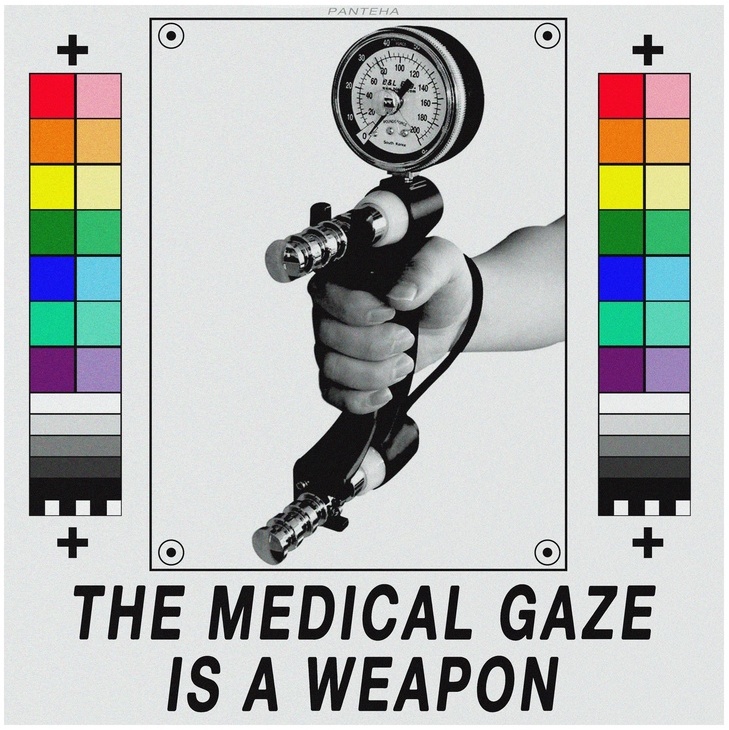
- Co-organiser of the artist talk with Panteha Abareshi, Nina Mèhlemann and Edwin Ramirez, Kunsthaus Zurich, June 2, 2022, watch online (from 47:35 on)
- Co-organiser of the artist talk with Jesse Darling, Research Project “Rethinking Art History through Disability”, Institute of Art History at the University of Zürich in collaboration with the Master Fine Arts ZHdK, 15 November, 2021.
- Co-organiser of the artist talk with Robert Andy Coombs, Research Project “Rethinking Art History through Disability”, University of Zürich (Switzerland), 11 October, 2021.
- Co-organiser of the symposium SHINE. A conversation with Jeff Koons about art, philosophy and spirituality at the Cinema Odeon in Florence on the occasion of the opening of the exhibition Jeff Koons. Shine at Palazzo Strozzi. With Arturo Galansino and Riccardo Lami.
- Research Seminar Co-organizer, “Disability, Art, Agency: Participation and the Revision of the Senses” with Amanda Cachia (California State University San Marcos), University of Zürich (Switzerland) in collaboration with the Bibliotheca Hertziana (Rome, Italy), 22 June, 2021.
Selected conferences and lectures
- 10 July 2025: Paper Presentation, Becoming Wings: Deviance, Agency, and the Art of Misfitting in Sarah Biffin and Lorenza Böttner, within the “Deviant Women”. Women and the Visual Arts Research Symposium, organized by Helena Anderson and Valéria Fülöp-Pochon on behalf of the Women and the Visual Arts Research Cluster, University of Bristol.
- 25 February 2025: Research Project Presentation at the “Coffee+Jam”, 25.02.2025, Karlsruher Institute of Technology (KIT), organized by Anna-Maria Meister, the Architekturtheorie Team at KIT and the Coded Objects group at the KHI.
- 17–19 October 2024: Respondent, Extending Subjects panel, within the symposium Objects: Between Absorption and Isolation, organized by the Lise Meitner Group “Coded Objects,” KHI – Max Planck Institute.
- 13 September 2024: Paper Presentation, "(Re)-Evaluating Artistic Norms and Temporalities: Feminist and Disability Perspectives in Contemporary Practice," within the Re-Evaluation in Feminism(s) and Contemporary Art conferences, organized by Katy Deepwell and Alexandra Kokoli, Middlesex University’s Hendon Campus, London.
- 30 November 2023: Invited Lecture, Anthills and Archives: Womanifesto Roots Down, with Varsha Nair, HSLU Lucerne.
- 29 November 2023: Invited Lecture, Misfitting: Functional Diversity in Art History, co-presented with Laura Valterio and Charlotte Matter, as part of the Critical Disability Studies series organized by the Equalities Committee, Faculty of Humanities, University of Bern.
- 24–25 October 2023: Paper Presentation, "Exile and Kinship: The Making of Diasporic Lines in the Works of Eva Hesse and Gego," at the conference Understanding Displacement in Visual Art and Cultural History: 1945 to Now, organized by the University of Manchester and Manchester Art Gallery, UK.
- 28–29 September 2023: Co-Presenter, "On the Use, Reuse, and Misuse of Medical Materials in Art: A Conversation with Vincent Barras and Jillian Crochet," workshop Biomedical Visions: Aesthetics, Epistemology, and Medical Practice, with Laura Valterio and Charlotte Matter, Max Planck Institute for the History of Science, Berlin.
- 18 January 2023: Invited Lecture, “Learning from Disability in Art History,” with Charlotte Matter, and Laura Valterio, for the Swiss Disability Network, organised by Brian McGowan, University of Zurich.
- 8 December, 2022: Invited Lecture, “Learning from Disability in Art History,” with Laura Valterio and Charlotte Matter, lecture series Kunstgeschichte/n verlernen, umlernen, neulernen, Bauhaus University Weimar [online].
- 14–17 November 2022: Paper Presentation, "Hitting Home: Representations of the Domestic Milieu in Feminist Art," Faculty of Art, Design & Architecture, University of Johannesburg.
- 15 November 2021: Seminar Lecture, "Diasporic Home and Exiled Bodies: Spaces of Memory in the Work of Jewish Women Sculptors in Post-War New York," Doctoral Colloquium WiSe 2021/2022, Ludwig-Maximilians-Universität München.
Participation in Roundtables
- Round table, "Rethinking Art Brut," with Monika Jagfeld, Director of Open Art Museum, St. Gallen, at Museum Ballpark, Luzern, Switzerland, 4 November, 2023.
- Roundtable and launch event for gta papers CARE, in collaboration with the Chair of Architecture and Care (Prof. Anna Puigjaner), ETH Zürich, 23 May 2023.
Curatorial work
2025–2026
David Weiss. Il Sogno di Casa Aprile. Carona 1968–1978
Co-curator with Dr. Tobia Bezzola, in collaboration with The Estate of David Weiss.
MASI Lugano, Switzerland, 28 September 2025 – 1 February 2026.
2024–2025
Ear to the Ground
Curator, Fondazione Centro Giacometti, Stampa, Switzerland.
5 July 2025 – 12 October 2025.
Luigi Ghirri. Viaggi.
Curatorial project assistant, MASI Lugano, Switzerland
8 September 2024 – 12 January 2025.
2022
Borderless Encounter: Soshana trifft auf Giacometti und Yanaihara
Curatorial support, JAM – Joint Art Management, Lucerne, 27 October – 26 November 2022.
Chryssa: Eccentric Abstraction
Curator, Blue Velvet Projects, Zurich, 10 June – 3 September 2022.
Io e il colore. Augusto Giacometti e Katarina Lichtner
Fondazione Centro Giacometti, Stampa, Switzerland, 12 June – 28 August 2022.
2021
Matthias Oppermann. Wie es mich sehen liess
Fondazione Centro Giacometti, Stampa, Switzerland, 4 September – 17 October 2021.
I volti di Soshana e Alberto Giacometti
Fondazione Centro Giacometti, Stampa, Switzerland, 3 July – 29 September 2021.